Now accepting early partners

Transforming how dysautonomia gets diagnosed

Wearable data and at-home testing protocols replace broken intake processes — getting patients to the right care, faster.

HIPAA Compliant
Real-time wearable sync
Clinical-grade protocols

The Problem

A diagnostic system that can't keep up

Dysautonomia cases have surged since COVID, but the infrastructure to diagnose and treat them hasn't changed. Patients are trapped in a system built for a fraction of today's demand.

5x

increase in dysautonomia cases since the COVID-19 pandemic

4.5yr

average time from first symptoms to a confirmed diagnosis

6–18mo

typical waitlist to see a specialist at a dysautonomia center

70M+

people worldwide living with some form of autonomic dysfunction

Broken Intake

Centers rely on lengthy self-reported questionnaires that are subjective, unreliable, and create enormous manual screening costs.

Wasted Appointments

Without objective pre-screening, centers fill precious appointment slots with patients who could have been filtered out earlier.

No Modern Tooling

Despite enormous demand, there is no technology purpose-built for dysautonomia screening. The space is completely underserved.

How It Works

From wearable data to clinical action

Zebra turns your home into an early screening environment, then connects you with the right specialist when it matters.

1

Wearable Integration

Connect your device — or use Zebra-branded hardware — to capture heart rate, HRV, and autonomic markers continuously.

2

At-Home Protocols

App-guided tests — active stand, deep breathing, tilt-response — turn your living room into an early screening lab.

3

AI Analysis

Our inference engine processes wearable data, test results, and health records into probability estimates and clinical summaries.

4

Concierge Referral

High-confidence patients are matched and prioritized at nearby dysautonomia centers for accelerated evaluation.

5

Ongoing Monitoring

Post-diagnosis, Zebra tracks treatment efficacy over time — real-world longitudinal data for patients and clinicians.

The App

Clinical-grade testing
in your pocket

Three validated autonomic protocols — orthostatic challenge, extended standing, and Valsalva maneuver — guided step by step with real-time wearable data.
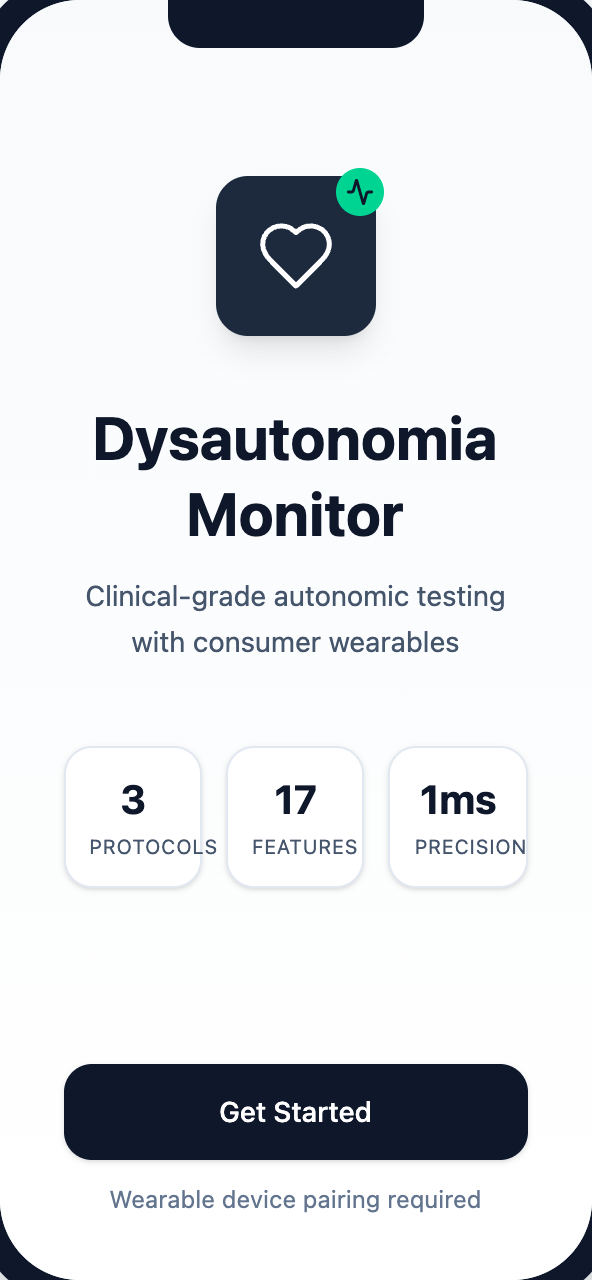
Welcome screen

Get Started

3 protocols, 17 features, 1ms precision
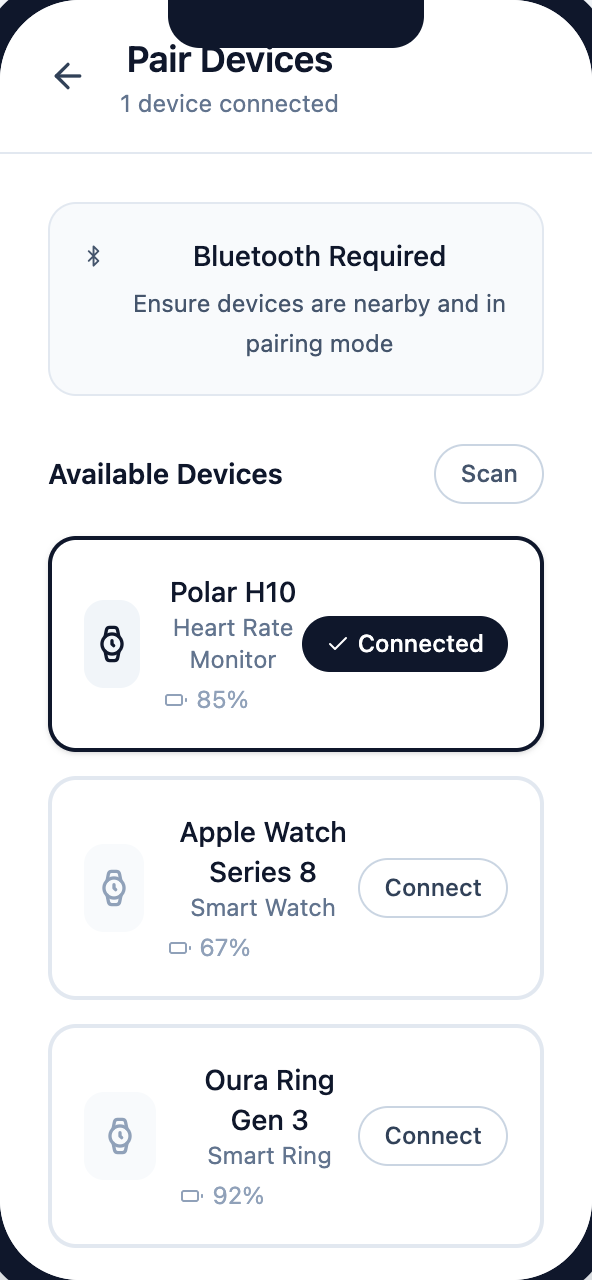
Device pairing screen

Pair Your Device

Polar H10, Apple Watch, Oura Ring — and more
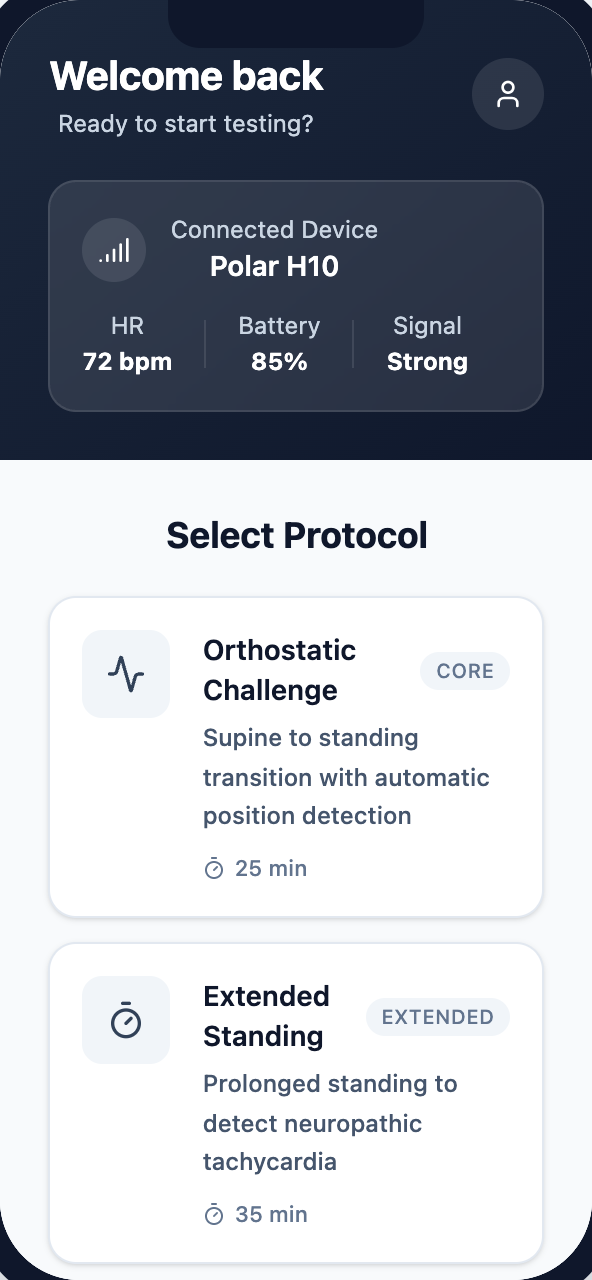
Protocol dashboard

Choose Protocol

Orthostatic, extended standing, or Valsalva
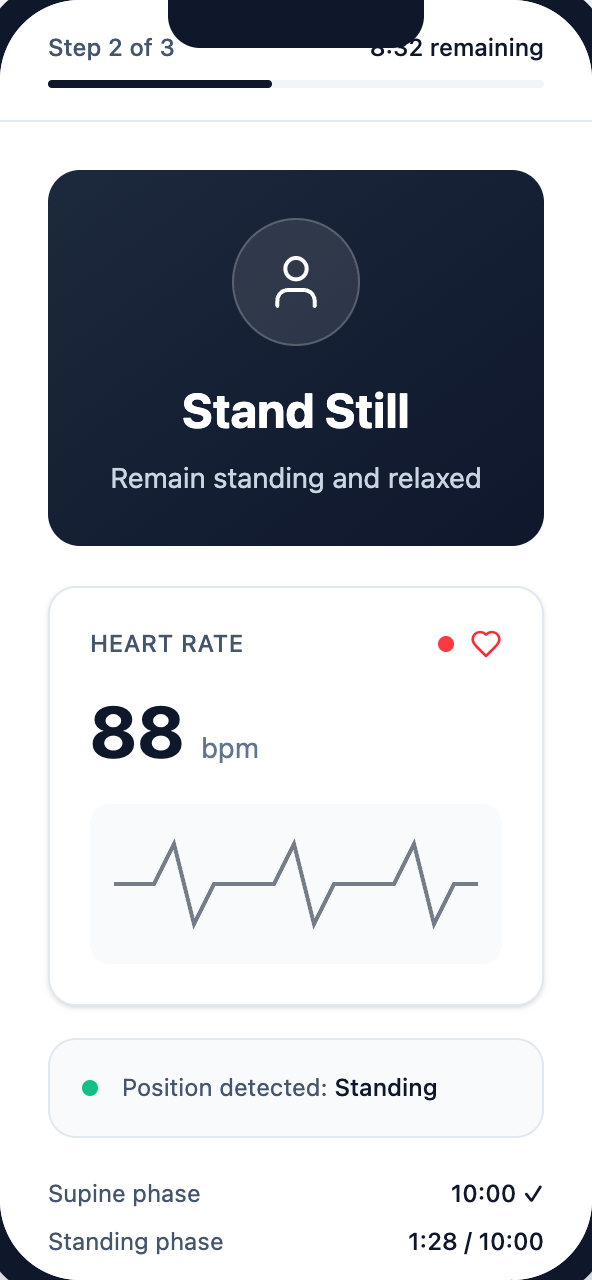
Orthostatic challenge in progress

Live Monitoring

Real-time HR, position detection, guided phases
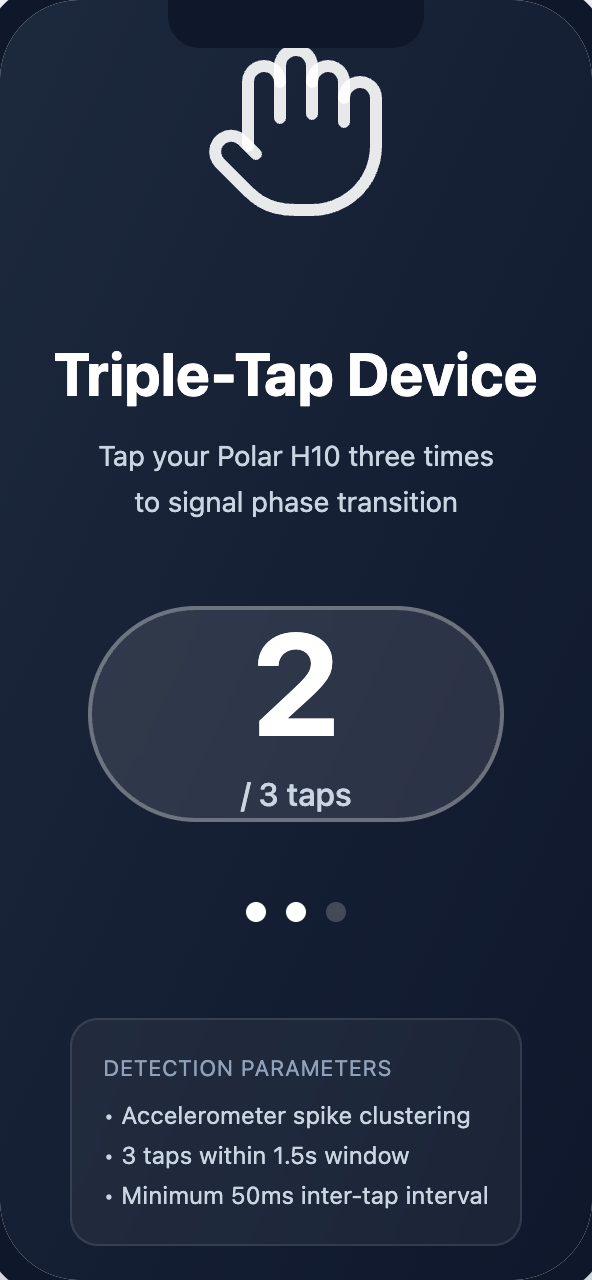
Valsalva maneuver screen

Valsalva Maneuver

Triple-tap detection via accelerometer
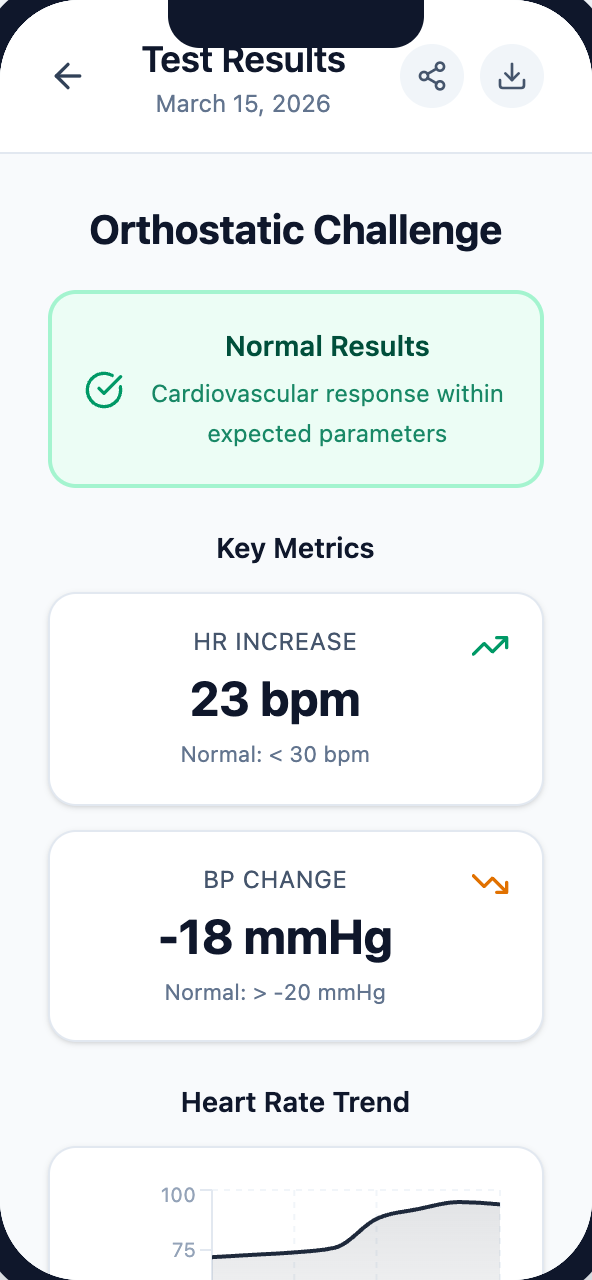
Test results screen

Clinical Results

HR increase, BP change, heart rate trends

For Dysautonomia Centers

We handle identification.
You focus on treatment.

Zebra acts as your screening layer. We identify, pre-qualify, and prioritize patients using objective physiological data — so your clinical team spends time where it matters most.

Outsource Screening Costs

Replace expensive manual intake processing — support staff plus physician review — with automated, data-driven patient filtering.

Accelerate Admissions

Get real patients with real dysautonomia into treatment faster by filtering on physiological data rather than self-reported forms.

Reduce Wasted Appointments

Higher-confidence patient identification means fewer false starts and more productive use of limited specialist time.

Real Data, Before Day One

Receive clinical summaries with weeks of continuous physiological data before the patient ever walks through your door.

Center Dashboard

Pre-screened

847

patients this quarter

High Confidence

92%

match rate

Intake Time Reduction

Before
After

Average: 3.2 weeks4 days

12 new high-confidence referrals ready for review

Research & Validation

Built on evidence.
Advancing the science.

Zebra is committed to rigorous validation and advancing the clinical understanding of dysautonomia through collaborative research.

Lab Partnerships

Collaborate with leading autonomic research labs to validate our detection methodology against gold-standard clinical assessments.

Co-Publication

Co-author detection results with principal investigators. Our longitudinal dataset provides a uniquely rich foundation for peer-reviewed research.

Clinical Trial Recruitment

A pre-screened, longitudinally-monitored patient population is enormously valuable for clinical trial enrollment and research recruitment.

Consumer wearable hardware is finally good enough for clinical-grade autonomic signal capture. Health data interoperability makes record aggregation feasible. The centers need this — they can't scale intake with their current manual processes.

The Convergence Moment

For Patients

Stop waiting.
Start getting answers.

You've been through enough. Enough misdiagnoses, enough dismissals, enough waiting rooms. Zebra gives you a clear, objective path forward — starting from where you are right now.

1

Connect Your Wearable

Link your Apple Watch, Fitbit, Garmin, or Polar device. Or get a Zebra-branded chest strap for clinical-grade precision. Your data starts working for you immediately.

2

Complete Guided Tests

Follow app-guided protocols from home: active stand tests, deep breathing tests, and more. Simple, safe, and designed around you. No clinic visit required.

3

Get Matched

Receive your analysis and get connected to the right dysautonomia center — with your data package ready, so you skip the intake backlog and get seen sooner.

Your symptoms are real.
Your data proves it.

Zebra gives you objective evidence to bring to your doctor. No more relying on symptom diaries alone. No more being told it's "just anxiety."