Clinical-grade dysautonomia screening with your wearable device. No more years of waiting. No more being dismissed.
If you're here, you've probably been on a long, frustrating journey. You know something is wrong with your body. We believe you.
Average time to diagnosis
Nearly half a decade of appointments, tests, and uncertainty before most dysautonomia patients finally get an answer. That is not acceptable.
The most common misdiagnosis
You know the feeling. Your heart is racing, you can barely stand, and your doctor says it is stress. Your symptoms are real, and they deserve real investigation.
Self-reported screening that misses real conditions
Most initial screening relies on you describing your own symptoms. But dysautonomia is physiological -- it shows up in your heart rate, blood pressure, and nervous system data. Subjective forms miss what objective data catches.
Waitlists at specialized centers
Even if your doctor believes you, the few dysautonomia centers in the country are overwhelmed. Half a year to a year and a half of waiting, while your life stays on hold.
"We built Zebra because we have lived this. The diagnostic odyssey should not define your experience. You deserve answers that start with real data, not more waiting."
However you want to move forward, Zebra gives you the objective data you need. Choose the path that fits your situation.
Do the testing at home on your own schedule. Get a clinical-grade report packed with objective data. Then bring it to your existing doctor and change the conversation.
Use Zebra's concierge referral to get fast-tracked into a specialized dysautonomia center. We pre-screen you, build your data package, and help get you prioritized admission.
Four simple steps from your couch to clinical-grade answers. No clinic visits, no long waitlists, no guesswork.
Polar H10, Apple Watch, Oura Ring, Garmin, or Fitbit. Use the device you already own.
Safe, simple, and app-guided. Done from the comfort of your home.
HR increase, BP changes, HRV analysis, 17 temporal dynamics features, and POTS subtype probability -- all in a clear, shareable report.
Bring your clinical-grade report to your doctor, or let us match you with a specialized dysautonomia center. Your data, your choice.
Guided protocols, real-time data, and clear results -- all from your phone.
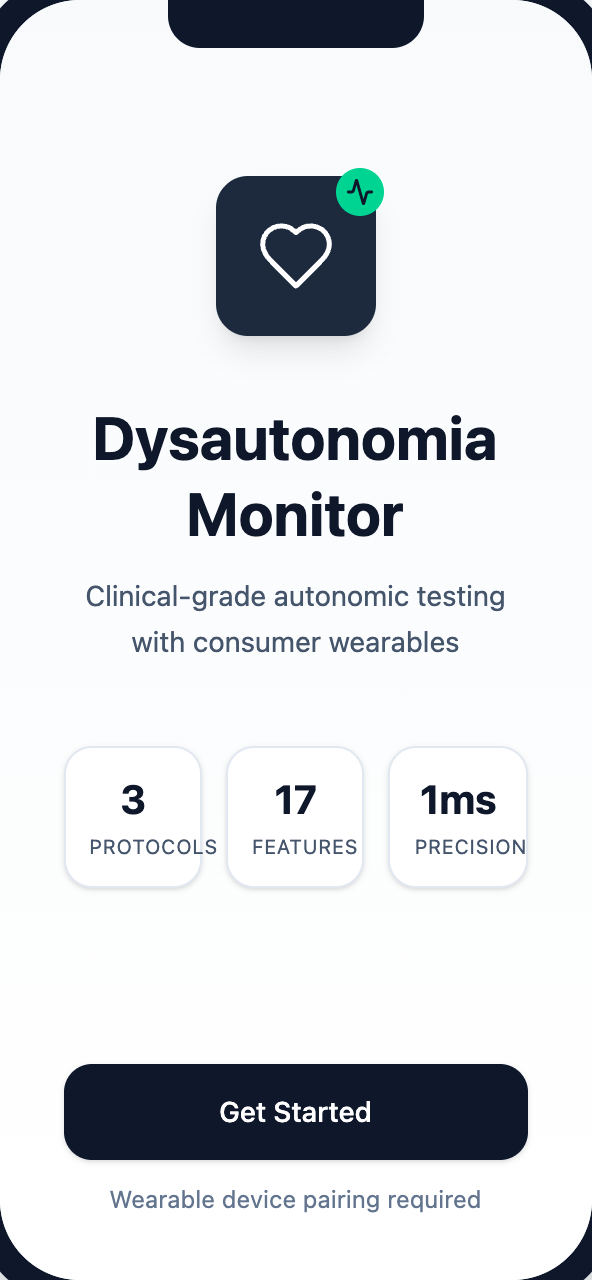
Welcome & Onboarding
Simple setup to get started
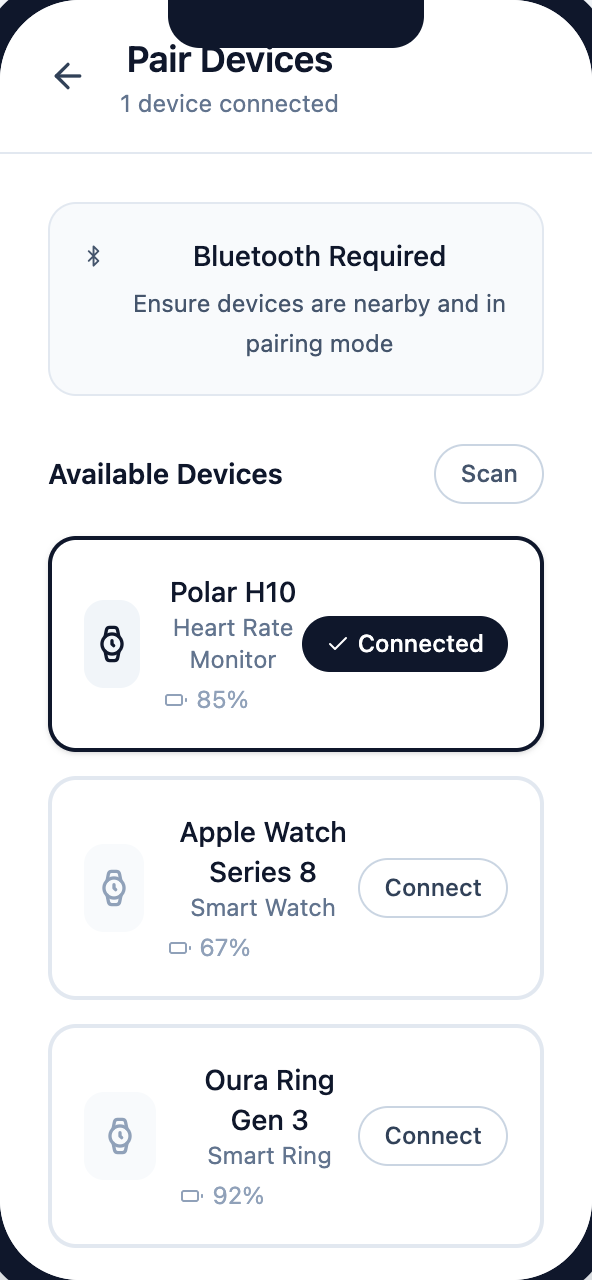
Device Pairing
Connect your wearable in seconds
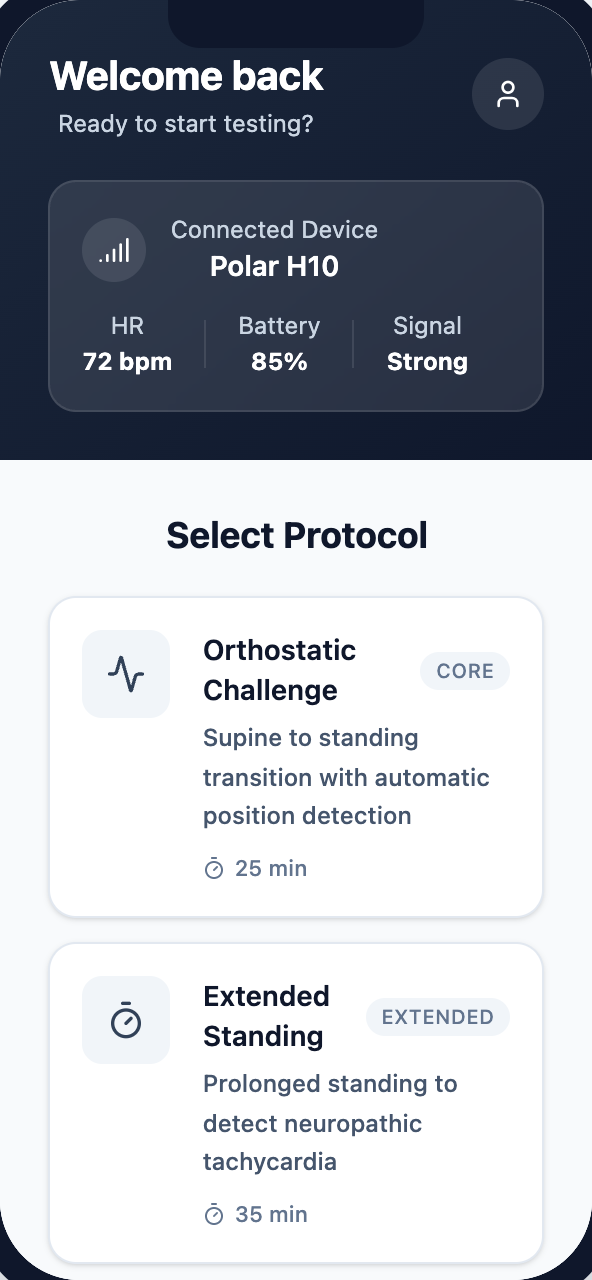
Dashboard
Your testing hub at a glance
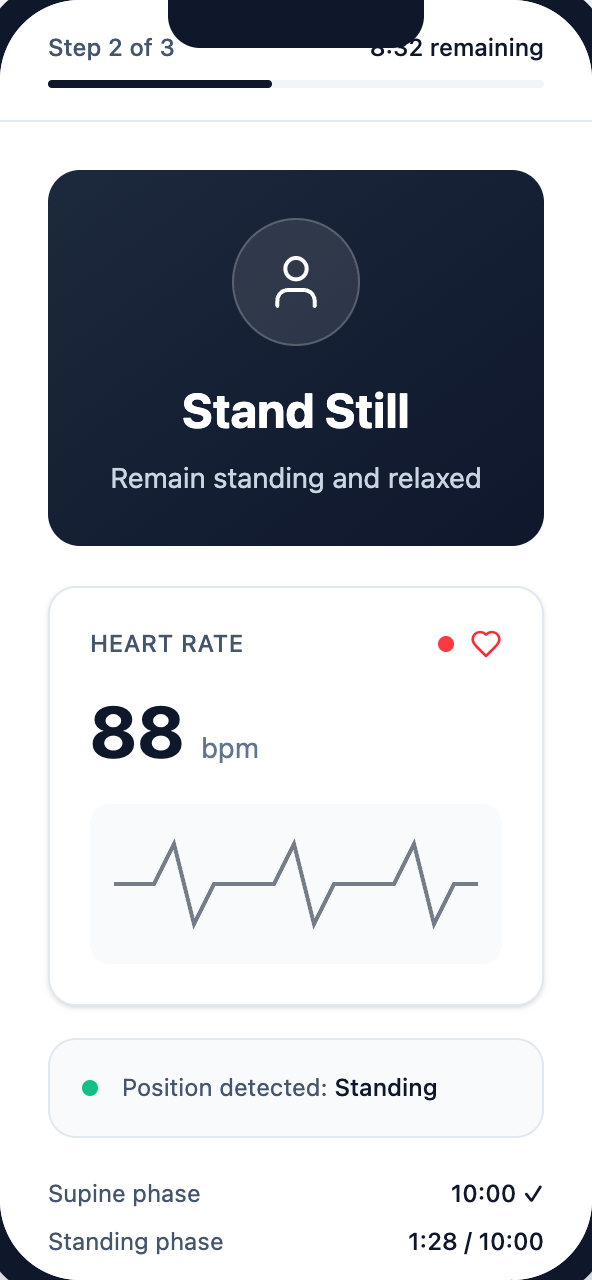
Orthostatic Challenge
Guided sit-to-stand protocol
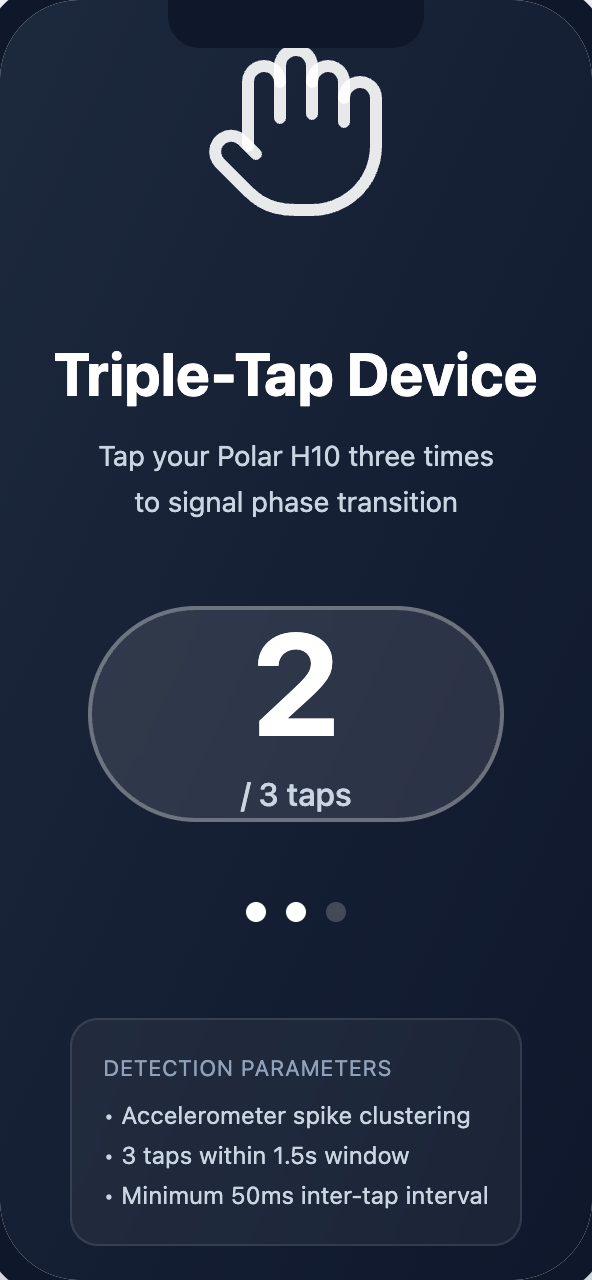
Valsalva Maneuver
Breathing protocol with live feedback
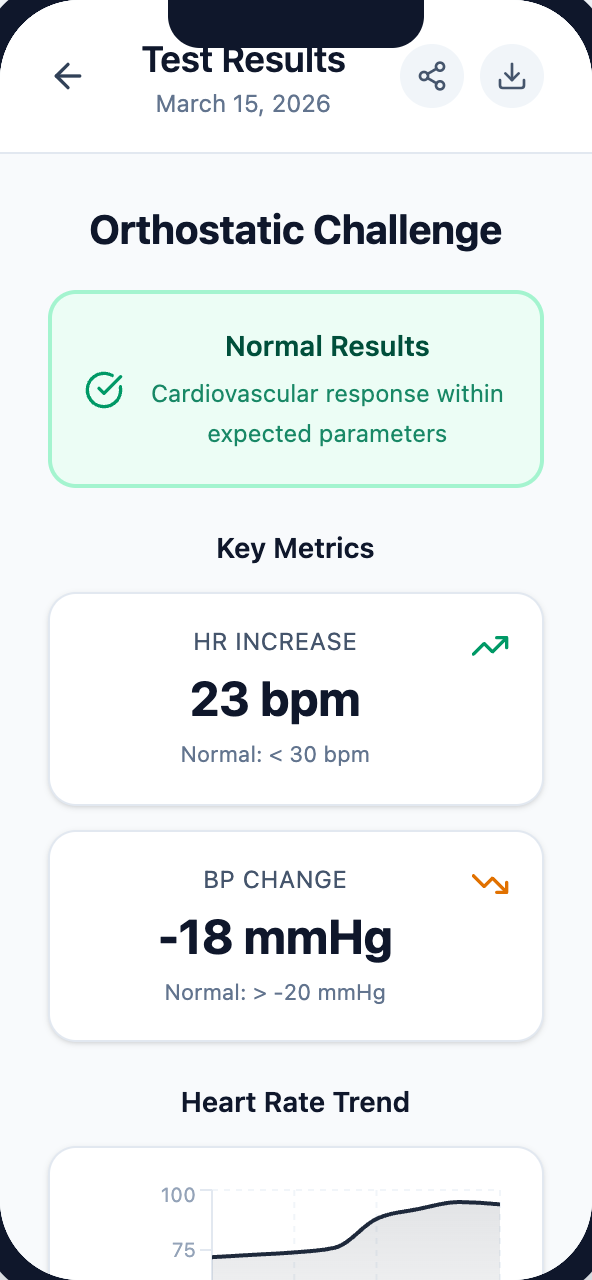
Your Results
Clinical-grade report you can share
Zebra screens for a range of autonomic dysfunction markers using real physiological data from your wearable.
Hyperadrenergic, neuropathic, and hypovolemic subtypes -- identified through your heart rate and autonomic response patterns.
Blood pressure drops on standing detected through cardiovascular response analysis during postural challenges.
Abnormalities in the blood pressure regulation feedback loop, revealed through Valsalva maneuver phase analysis.
Abnormal sympathetic nervous system responses that affect blood vessel constriction during positional changes.
Delayed or impaired parasympathetic recovery after physiological stress, a key indicator of autonomic dysfunction.
Reduced or abnormal HRV patterns that signal autonomic nervous system imbalance, analyzed across time and frequency domains.
Clinical-grade screening, patient-owned results. We built Zebra with your privacy as a non-negotiable foundation.
Your health data is protected by the highest standard of healthcare privacy regulations.
We do not sell, share, or monetize your health data. Period. That is a promise, not a policy footnote.
Share your report with your doctor, a specialist, or no one at all. You decide who gets access.
The same rigor as a hospital test, but you hold the results. Download, print, or share on your terms.